Sunday, August 28, 2022

Parrot-Tasted Mango

Parrot-Tasted Mango

I was a great tree climber when I was young. Our backyard had a huge mango tree with trunk over a meter in diameter that shot straight up, branchless, for over 20 feet before it branched out to a large Mango Tree that spread over two to three backyards of neighboring homes on either side. This tree was hard to climb. However, there was another thinner Jack Fruit tree that grew tall and pushed through some of the branches of the mango tree and towered over the top on one side of the backyard. During peak mango season, the mango tree was awash with mangoes hanging from all parts of the tree and some of them are easy to reach in the branches abutting the Jack Fruit tree. On many warm quiet summer afternoons, when my mother and my aunt were asleep, there would be no one to supervise, and I would quietly climb up the Jack Fruit tree, pluck the fresh mangoes, climb down, and eat them with a side of salt and chili powder. I would have my best pick as there would be plentiful in every branch and depending on my appetite, I would select the size. Sometimes, I would share it with my friends from the neighborhood.

Mango season attracts parrots from near and far. I have seen swarms of them during late afternoons and evening, spread throughout the tree and feasting on the plump mangoes. Of course, this would damage the fruits and destroy the bounty, but among us kids, there was a general fascination about the mangoes nipped or partially eaten by the parrots. We used to think that parrots would know what mango to eat, and it would pick only the ones that taste best. Hence, we used to fight for mangoes that parrots already tasted and left. The kid who got the parrot-tasted mango would be a hero, and others would beg to get a piece of it.

I, when I am in a naughty mood, sometimes played a trick on my unsuspecting friends. When none of my friends was around, I would sneak to the backyard, climb up the Jack Fruit tree, and reach the canopy of the branch from the mango tree so I can access the mangoes without plucking them. I would gently pull the hanging mango near me so that it does not come off the stem, bring it near my mouth, and would eat it right there as it hung, take a few bites, and then leave it hanging on the tree. I would do this for a few choice mangoes in that bunch, and would come down, and go about my business. Later, when my gang of friends comes to play, I would innocently direct them towards that mango cluster near the top of the Jack Fruit tree and act excited as if we found a number of parrot-tasted mangoes. I would graciously offer to climb up the Jack Fruit tree, pluck the “Parrot-eaten” mango, give it to them, and I will watch them enjoy the mango, think about my devious plan to fool them as I contained myself from laughing out loud.


Picture suggestion

Boy with a naughty smile, surrounded by similar age boys, all wearing loose shirt, half trousers in our backyard. Mango tree in the backdrop (something like the picture of you and Gopi annna that dad shared) thrusting the “parrot eaten” mango to his surprised friends.


Some links

https://birdybirdybirdy.com/can-parrots-eat-mango/

https://indacampo.files.wordpress.com/2014/05/dscf1114.jpg


Saturday, August 13, 2022

Blown Out Of Proportion

    I have never seen my face in profile when I was growing up. The frontal image that appears in a two-dimensional form in the mirror is not very ugly and when I smiled, it even appeared pleasing. Moreover, my mother and my sisters always admired my appearance and used to compare me with a north Indian actor. It boosted my self-esteem a lot, and I went about imagining how I appeared to others, comparing myself with good-looking actors from the film world. No one mentioned anything about my teeth. Though it is not a disaster, I have slightly projected front teeth causing my upper mouth to protrude. This fact evaded my attention and delivered a big blow to my self-esteem one fine day.

    My brothers closest friend, is one of the most creative minds that I ever saw in my entire life. He was pursuing his Bachelor’s degree in architecture from the prestigious School of Architecture and Planning in Chennai, India. With his magical touch, coke cans became pen stands, trunks of coconut trees became bar stools, and paper plates became wonderful lampshades. On a warm summer night, shirtless and wearing a lungi (a traditional piece of cloth worn around the waist like a long skirt), he was once again in a creative mood. This time he wanted to draw carbon sketch of our profiles on the enormous wall from the neighboring house that was abutting our north side. It was a dark moonless night, well past eleven. My two elder brothers along with their best friends usually hang out on the open terrace, shirtless in the night, to escape from the radiating heat and enjoy the cool sea breeze that sets in late in the night. They brought a big ladder and set it on the wall. My brother switched on a small table lamp and first this friend went and put his face in front of it in a profile so that an enormous black shadow of his profile appeared on the wall. He adjusted the size so that we can fit four profiles on the wall. Once he determined the size was good, my eldest brother climbed the ladder and with a piece of charcoal, drew his friend's profile depicting his ever-present glasses and beard. It was a fine portrait. One by one, we all took turns and our profiles appeared like the crop circles on the wall. The shock of my life came once my profile was finished and I turned around to see it.

Only then, I realized my angled teeth! I felt so heartbroken that my face in profile does not match my frontal view in mirror and the imagination of what I had in my mind. I felt as if an axe fell through and tore my ego into two pieces. That day instilled a bit of humility in me. I realized that I might not be as attractive as the architect or my brothers or many of my friends. I understood where I stand in society in terms of my appearance and what not to imagine! 

Notes for Charan:

Age: Probably 10-12
Place: Open terrace, and imagine the north side, Sukumar's house, with window and the wall facing our terrace. It goes all the way up to their second floor terrace 
If you face the wall, you are facing north, and on your right is our tiled roofs for hall, koodam, etc. and left is the street side
Time: Night, dark, on the left, you can see the street tube light, but it would still be dark. Dark figures here and there of Chandranna, Gopi Anna and Suresh Anna (I removed his name from the article). A table lamp (that springy one with a semi-circle lamp shade, projecting on to this kid's face, and the shadow on the wall, and one of the adults tracing it. That is the scene but the story is about the shock. So set the scene of lamp, light falling on the faces of the adult players, and the kid looks shocked to see his profile on the opposite wall! 
Hope you got the idea. 

And Charan: If you have some good stories, just send me some bullet points, and I will weave it in. Like Appa sitting on the easy chair, send me some bullets, and I will weave a story.


Wednesday, November 13, 2019

Tech Around The Corner – Whose job is it next to go?


As a tech enthusiast, I closely watch how tech disrupts traditional models and quickly obsoletes existing job functions. Although this revolution creates niche jobs in companies that create these tech, it almost certainly targets low end, repetitious and sometimes tedious processes that provide income and living to a broad base of citizenry. You all know the industrial robots that paint, weld, manufacture, and assemble in factories. Similarly, Uber, Amazon, and AirBnB eliminated traditional business models, and along with it, many a jobs in this segment. The next industrial revolution, as it is fondly called, will belong to data, algorithms, AI and ML that is sure to disrupt many business functions, thereby eliminating more jobs. For example, writing summary reports based on data, such as a game summary in sports, sales summary in a business, a competitor analysis in marketing, are the next target. Armed with deep computing power, and algorithmic models that can dig into data, and prepare pre-canned summaries, niche players such as Narrative Sciences, are developing products to generate such content and this concept is slowly gaining foot and adoption in many large organizations. It is easy to see that entry level, assistant roles in marketing, sales, support, and finance, that used to produce standard reports month, over month, based on new data, are bound to be gone in the next decade.

Similarly, I can see rapid strides made by tech in the healthcare sector. Every day, routine checkup items such as blood pressure, temperature, weight, as well as complicated measurements such as pulse and EKG is now available either as a part the smart phone, smart watch, or as an extension device that connects via Bluetooth to your smart phone. Even invasive measurements such as blood sugar, urine analysis, and stools analysis can be done in home, with additional devices that smoothly connect to your smart phone. With advances in cellular technologies such as 5G, soon, the doctor will talk to you through your smart phone, receive readings to his hand-held and provide consultation wherever you are. When I think deeply, the next job to go is that of the nursing assistant at clinics and hospitals, who check you into a room, and conducts basic measurements such as BP, height, weight, temperature, pulse and probably EKG. Instead, you can either complete all of them at home or do it in a room that is fitted with a kiosk. The need for assistants would be limited to cases where the patient is very old or incapacitated and all routine physical measurements are bound to be automated.

Although exciting to be a part of this tech revolution, and there is a rising need in the sectors who create such disruptors, it is only fair to ask these technology giants who pull the rug from under, to think of creating at least a mat for those who are bound to fall.

I always wonder why someone cannot create an app, or a product that could replace a CEO or CFO or the Wall Street crowd that controls the market! Imagine just apps managing Wall Street. The Fearless Girl, instead of hands on her hips, she will have one hand extended, showing the bull the smart phone that is now running Wall Street. When would that be? I Ponder!

References (just a sample..there is more out there)

Natural Language Generation: https://narrativescience.com/products/quill/
Cellular enabled blood glucose monitor: http://telcare.com/
Continuous glucose monitor: https://www.dexcom.com/
Blood pressure cuff with app: https://omronhealthcare.com/blood-pressure/
Temperature measurement with app: https://www.kinsahealth.co/products/
Urinalysis kit with app: https://healthy.io/
And, drum roll…..of course your Apple watch: https://www.apple.com/healthcare/apple-watch/


Dr. Appa Rao


The first doctor I remember most is the distinctive Dr. Appa Rao, who practiced in a tiny, probably 600 sqft space, that was a large room rented out by my closest friend Naans who lived across from us. It was a lengthy room, with two tiny wooden doors, probably not more than 10 feet wide. The length of the room was divided using wooden partitions into three sections. The first section as you enter is the patient waiting area. Patients can sit on a long wooden bench, or a few steel chairs, neatly laid along the walls. A plain cloth screen adorned the entrance to the second section where the doctor examined his patients. A steel bed was also snugly fit in this section that left Dr.Appa Rao with only a few feet moving space. At the back, behind the doctor’s room is the space for the compounder.

Dr. Appa Rao is the quintessential Telugu. He was very fair and always dressed impeccably. I remember very vaguely that he usually wore a nicely pressed white shirt, and white pants, with black shoes and black rimmed eyeglasses. He drove a Lambretta scooter that he would park in in a small space in front of the his office (see references for a typical Lambretta scooter). One thing all of us used to watch was the way he kick started his scooter. Starting would involve a sequence of operations. First, he would stand on the side of the scooter that has the kick-start pedal. Holding the handlebar in one hand, and gripping the seat back, he would release the scooter from the stand. Then, he would tilt the scooter towards him to make sure the fuel flows smoothly. Then he would twist the knob to open the fuel flow. Again, holding the handle bar with his right hand, and the seat back in his left hand, he would use his left foot to kick the pedal. As kids, we get excited to see the doctor in person, and that too, kick starting his scooter. We used to wait for this moment to observe the doctor as otherwise we get to see him only when we are sick. In particular, when he kicks with his left foot, his right foot would lift up and bend, almost mimicking a mirror image of what he is doing with his left foot. He would start his scooter in a few kicks and drive away into the night.

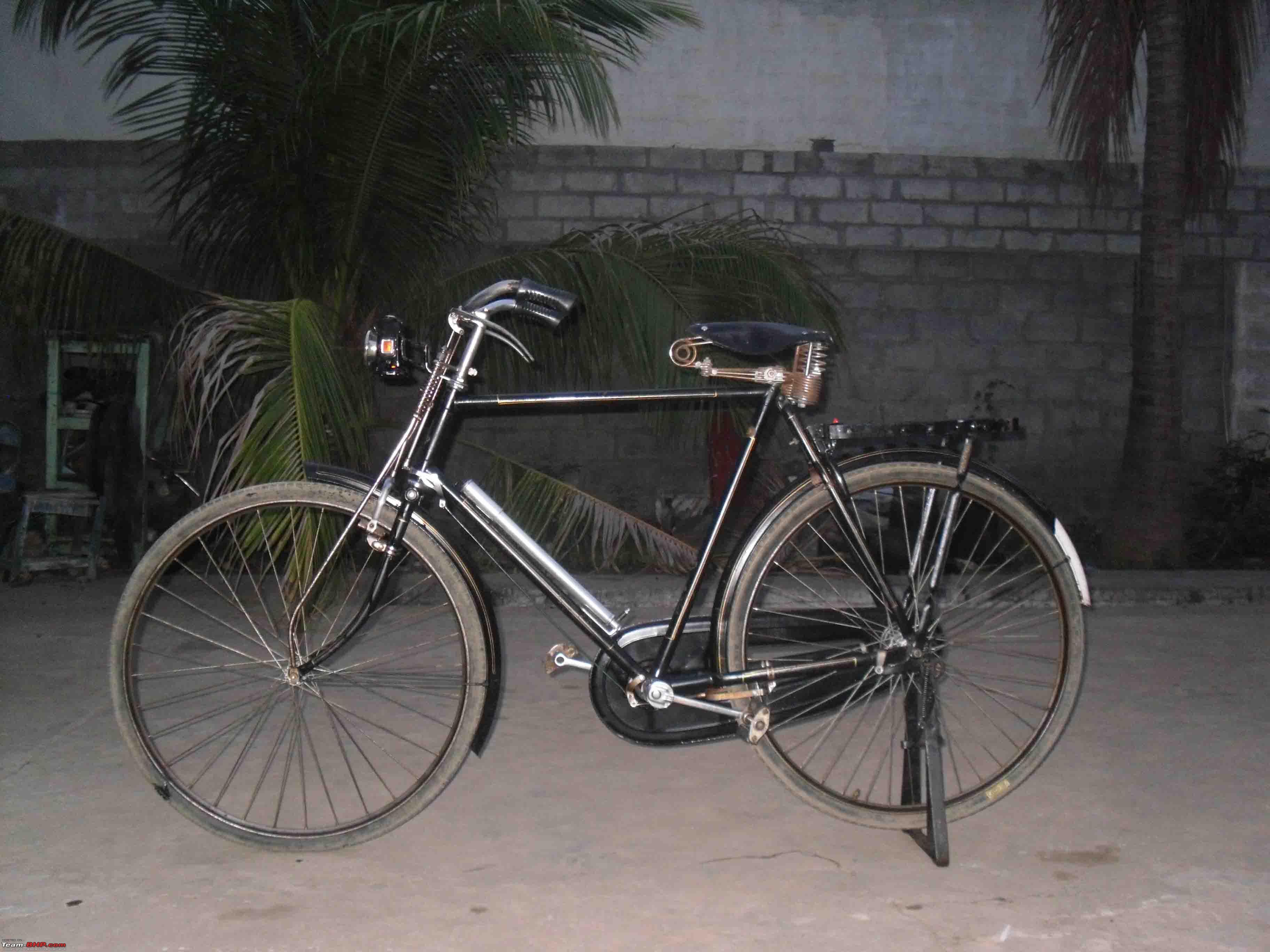
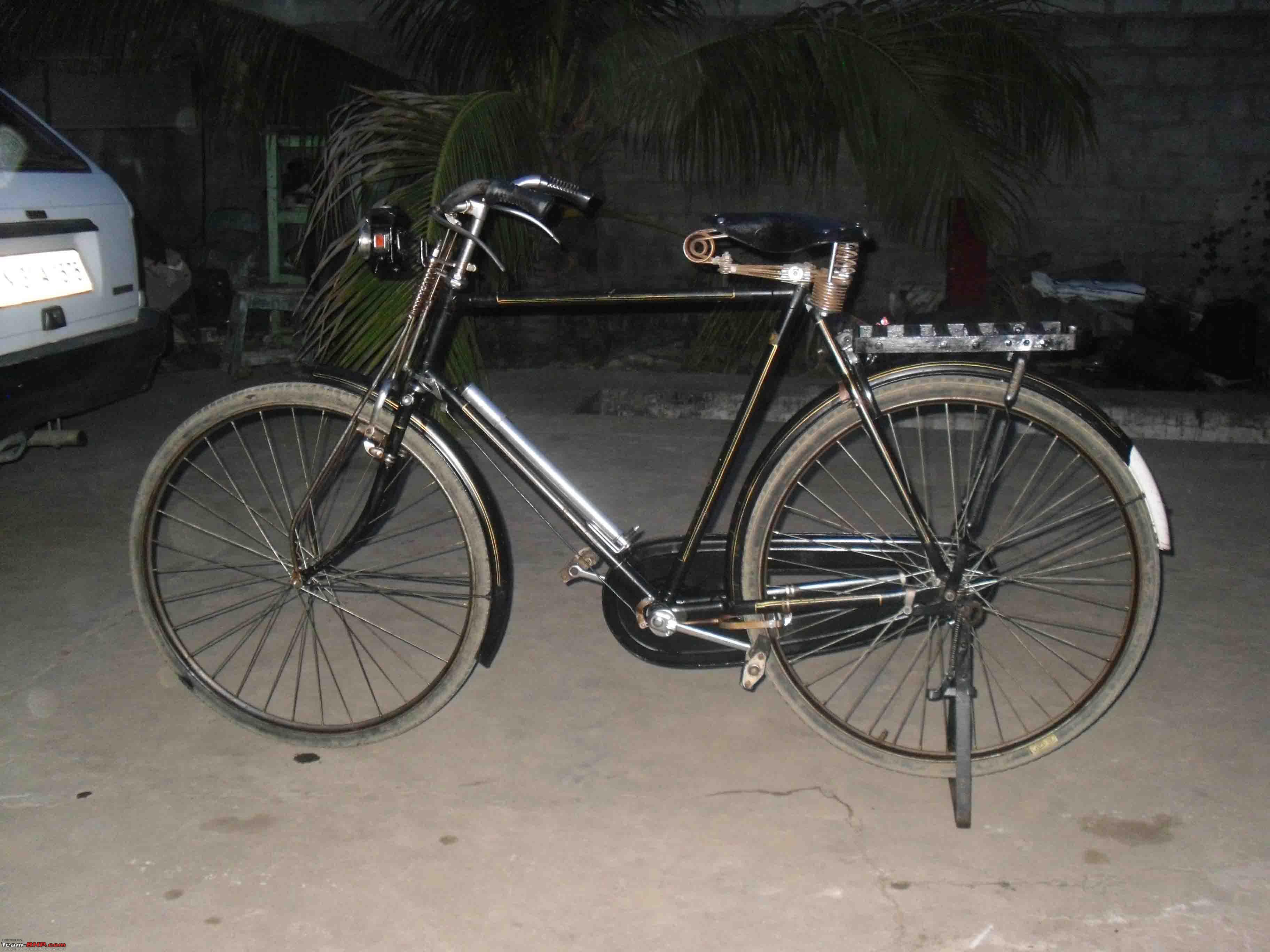
Dr.Rao’s compounder was a tall lean fellow, probably in his thirties when I was a little boy, and I never knew his name. We all called him the compounder. He used to arrive probably around 5.30 or 6.00 PM and left after the doctor leaves, around 9.00 or 9.30 PM. He drove a black classic old bicycle (see references for the bicycle and lanterns) and, as it grew dark on the way back, he had an oil lantern affixed on the handlebar. Those days, oil lanterns served as the headlamp for bicyclists in the night. We too had one such lantern and I always enjoyed filling up oil, twisting the knob to raise the wick, open the tiny door with a tiny red colored glass window, and light it using a matchstick. Though the doctor treated us, the compounder was more near and dear to all as he dispensed the medications in right quantities. He always powdered the tablets, measured into individual doses, and packaged in small paper packets. The most interesting dispensing method is for the liquid medicines. He had a variety of transparent glass bottles in different sizes (see references for sample medicinal bottles). Depending on the dosage, he would fill up the right bottle with the liquid medicine. Then he would take a long strip of paper, probably 1 cm in width and cut it to the length that matches the height of the liquid in the bottle. Then he would fold it into as many flips as the dosage, cut notches along the edge, that when straightened, looks like a series of octagons (see picture Bottle with Dosage). He would then fix this strip of paper using glue along the middle of the bottle and voila, we have our liquid medicine with correct dosage. When we are done with the dosage, we normally return the bottle back to the compounder so he can clean it and use it for another patient.

Almost everyone in the street and nearby streets consulted with Dr. Appa Rao for common illnesses. As time passed, several of my brother’s friends became doctors and started practicing in the same neighborhood. Dr. Appa Rao grew older as well, discontinued his practice, and moved out. We never knew what happened to him or his compounder after that.

References:
Lambretta scooter owned by Dr. Appa Rao. It looked like the one on the cover of this page: https://www.amazon.com/Lambretta-Bible-models-built-1947-1971/dp/1845850165
Sample medicinal bottles:

Antique bicycle with oil lamp headlight, used by the compounder:

Tuesday, November 5, 2019

Tech Around The Corner – Crime Prediction using AI / ML


Futuristic technology always fascinates me. As an avid Star Trek (Trekkie) fan, it is amazing to see several of the gadgets, in a limited form, comes to reality. The iPad, touch screens, handheld devices with massive bandwidth and compute power, flat screen TVs, automatic open/close sliding doors, sensor-based devices such as faucets, paper towel dispensers, and many more. Along these lines, I read an article in CIO Online, Can crime be predicted with AI/ML?, published through IDG Contributor Network. As AI/ML technology, algorithms and data collection avenues expand and mature, the author thinks that in a short span of time, we will have a pre-crime unit, as featured in the Tom Cruise cult classic, Minority Report. Instead of the three “precogs”, we will now have layers of Lifelong Learning Machines (L2M), continuously consuming petabytes of data by the hour, learn and adapt using biology based algorithms and project on the screens where and when the next crime would be.

Although scary, humanity has to adapt to the next technology revolution propelled by the advances in computing, AI, ML and robotics. In particular, such technology is bound to be used as a controlling factor in less democratic nations where a closed government and lack of journalistic liberties create a cauldron for secretive implementations aimed at its own citizens. America has to lead the way, formulate rules, and have the ability to counter balance a rogue nation using such technology to suppress freedoms. Aren’t we living in interesting times?

References:
CIO Article – Can Crime be Predicted with AI/ML? - https://www.cio.com/article/3401401/can-crime-be-predicted-with-ai-ml.html
DARPA – Lifelong Learning Machines (L2M) - https://www.darpa.mil/program/lifelong-learning-machines

Friday, November 1, 2019

Masana Kollai – Raid of the cremation grounds


Although many religious processions of various deities pass by our home in Mylapore, the one that creates most intrigue and kindles mortal fears in us children is Masana Kollai. Literally, it means a raid of the cremation grounds. It is a festival dedicated to goddess Amman, the South Indian Tamil name for goddess Parvathi or Kali. Later, I learned that this festival happens in the month of February/March and dedicated in particular to one goddess, Angalamman, which is another name for Lord Shiva’s consort, Parvathi. Deeply etched in my memory are the images, sounds, and the noisy spectacle of a procession of a huge, blood red faced idol of the goddess. It is probably 10 feet in diameter and carried by a coterie of strongmen on an open palanquin. The attending priest, bare-chested, wearing a red dhoti, hailing from the community that maintains the Amman temple, will stand in front of the goddess on the palanquin. This palanquin and the procession, will start from the temple premises and slowly make its way through the streets, making frequent stops. Families living in nearby homes will offer fruits, flowers, and coconuts to the goddess and the priest will give back the offerings along with sacred ash and the red sacred powder called kumkum. The ultimate destination is the Mylapore crematorium for the kollai or the raid.

The procession itself is an audiovisual spectacle. A cacophony of sounds, comprising of a duet or quartet of paramolams (a circular drum of about 3 feet in diameter, covered with taut cow or goat hide) , the haunting reverberations of the udukkai  (a handheld small drum, in the shape of an hourglass), thunderous blowing sounds from long and semicircular country trumpets, along with pleasing tunes from traditional nadaswaram and thavil, creates an atmosphere of a massive raid. Add to it, a multitude of country dancers painted like tigers in yellow and black stripes, country martial artists swinging sticks, and weapons made from deer horns, and a group of women, dressed in red or yellow saris, with flowing hair performs sami attam, a dance in a possessed state. You watch this once, and it will leave a lasting impression for life.


The epitome of all the mela is the gruesome, bloody entrails of a goat carried in a thatched bamboo tray called the muram. This will not be visible at street level as the vessel is on top of the palanquin. Hence, the only way to see it is from the top. As a kid, I am always intrigued and curious to see this macabre display. However, my mom will never let us children see this bloody display. I, along with a bunch of neighborhood kids, will pretend to be at the street level, and then rush upstairs to the open terrace, jump and hang from the parapet wall, pop our heads out, as we were shorter than the parapet wall, and excitedly glance at the entrails. It usually has liver, kidneys, and intestine. Not sure if I remember if it had stomach, but definitely liver, kidneys and intestine. Sometimes a few black colored, dead, headless chickens hang from the sides of the palanquin. Story goes that during rituals conducted at the temple, the priest, in a possessed state, bites off the chicken head and spits it out!
The entire procession goes to the Mylapore crematorium where the priest conducts a special ritual for the goddess that mimics the mythology behind this festival. I heard massive crowds throng to get Her blessings. I never ventured into the crematorium grounds until probably during college, when I went to say farewell to a very good fiend.

References:
Silambattam and Tiger dance example: https://www.youtube.com/watch?v=d29gLBFgy7E
Saami attam (see from 0.40 onwards) https://www.youtube.com/watch?v=xu3bFv4MJqA


Sunday, October 20, 2019

Cowboy Raja

Our home had a verandah in the front, to the right, as soon as you enter the house through the small, twin, green wooden doors. The verandah served a multitude of purposes. It was closed on three sides: the back, and the left and right sides. The front had a big 6×10 opening that had a geometrically shaped grill, made of metal bars, probably 10mm square steel rods. You can easily sit in the verandah on a chair and watch everything and everyone go by in the street. Often my uncle or elder brother would carry bicycles into the house and park it in the verandah. On the south wall inside the veranda, we had the electric main with fuse and main switch. The grill in the front opening served as a tie-post for the cows that belonged to our friendly neighborhood milkman.
Before the widespread adoption of pasteurized milk in bottles and plastic containers, everyone in our neighborhood always bought fresh milk, milked from the cows, that was sold by our milkman, through a small shop next to our home. The shop is nothing more than a five foot by five foot opening, which was about another five feet deep, with no lights or electricity or any kind of convenience. If my memory was correct, there was a small awning on the top, and it had small green wooden double doors. This was the castle of our milkman Raja. Raja was quite a character. He always wore a white dhothi (a large piece of cloth tied around the waist, a traditional south Indian dress for males) and white full hand shirt, with sleeves folded. Most of the time, he wore a white turban, thick black glasses and sported a big black mustache. He owned several cows and had a few assistants to herd, feed, and milk them. Back in the day, and probably even today, having cows and making a livelihood from selling milk, is considered unattractive since a city dweller does not want to herd cows, take care of them, clean their droppings and milk them. However, the image of a western cowboy conjured a cool and awesome image. Hence, my niece and I, as we always like to coin nicknames for colorful characters, christened our milkman as Cowboy Raja.
Every day, without fail, my mom would collect all the vegetable scraps from the day’s cooking and combine them with the starch left over from boiling rice in a tin container. Cowboy Raja’s assistant would provide such tin containers to a few families in the neighborhood who volunteer to donate the scraps, and collect them when the cows arrive. Cowboy Raja sometimes would walk with the cows, or come in a bicycle while his assistants would bring them, without fail, around two PM. Typically, there would be three or four cows and the assistant would tie a few of them to the grill in our verandah. We often would stand inside the verandah, sneak our hands out through the gaps in the grill, and touch the cows. The assistant would mix some feed along with the contents from the collected tin containers, make a feed, and distribute to the cows in wooden vessels. The cows would happily eat them, and the milking would start. When the first squirts are pulled from the udder into the cylindrical tin milk containers, it would make a nice chirpy rhythmic, “tringg..tringg” metallic noise that would quickly fade into a dull “burrr..burrr” as the milk starts filling up in the container. The most distinctive thing I remember is the fake straw calves. Cows generate milk once the calves are born. Cowboy Raja would raise the calves to sell them later but often the calves die due to complications. If the calves are alive, they would accompany their mommy cows and get a few sucks from the udder first when milking starts. They would then be whisked to the other side while the assistant milks rest of the milk from the mommy cow. The saddest part is when the calves die. To keep the mommy cow thinking that her calf is alive, they would make a calf lookalike, albeit a very crude one, out of straw and sticks. These straw calves would come with the cow caravan and kept next to the mommy cow so that she continues to generate milk. It is sad to see mommy cow fondly tries to lick the straw calf thinking it is alive and drinking her milk.
Once milked, the milk would then be transferred from the cylindrical containers to a steel bucket in Cowboy Raja’s shop. My mom would give me a stainless steel vessel, with some cash, and I would go walk past the cows to Raja’s shop. There I would ask for a quarter liter of milk. Raja had aluminum-measuring cups of various denominations. I always wondered at the big one-liter containers and thought who would need such a large quantity of milk. Raja would dip into the bucket, measure the milk, and pour it into my stainless steel vessel. For posterity’s sake, he would measure a few additional milliliters in a small measuring cup and add it to our vessel. You would leave a happy kid, as you got a bit more than quarter liter. I wonder what happened to Cowboy Raja, his cows and his family as everyone buys milk from supermarkets now.