Wednesday, November 13, 2019

Tech Around The Corner – Whose job is it next to go?


As a tech enthusiast, I closely watch how tech disrupts traditional models and quickly obsoletes existing job functions. Although this revolution creates niche jobs in companies that create these tech, it almost certainly targets low end, repetitious and sometimes tedious processes that provide income and living to a broad base of citizenry. You all know the industrial robots that paint, weld, manufacture, and assemble in factories. Similarly, Uber, Amazon, and AirBnB eliminated traditional business models, and along with it, many a jobs in this segment. The next industrial revolution, as it is fondly called, will belong to data, algorithms, AI and ML that is sure to disrupt many business functions, thereby eliminating more jobs. For example, writing summary reports based on data, such as a game summary in sports, sales summary in a business, a competitor analysis in marketing, are the next target. Armed with deep computing power, and algorithmic models that can dig into data, and prepare pre-canned summaries, niche players such as Narrative Sciences, are developing products to generate such content and this concept is slowly gaining foot and adoption in many large organizations. It is easy to see that entry level, assistant roles in marketing, sales, support, and finance, that used to produce standard reports month, over month, based on new data, are bound to be gone in the next decade.

Similarly, I can see rapid strides made by tech in the healthcare sector. Every day, routine checkup items such as blood pressure, temperature, weight, as well as complicated measurements such as pulse and EKG is now available either as a part the smart phone, smart watch, or as an extension device that connects via Bluetooth to your smart phone. Even invasive measurements such as blood sugar, urine analysis, and stools analysis can be done in home, with additional devices that smoothly connect to your smart phone. With advances in cellular technologies such as 5G, soon, the doctor will talk to you through your smart phone, receive readings to his hand-held and provide consultation wherever you are. When I think deeply, the next job to go is that of the nursing assistant at clinics and hospitals, who check you into a room, and conducts basic measurements such as BP, height, weight, temperature, pulse and probably EKG. Instead, you can either complete all of them at home or do it in a room that is fitted with a kiosk. The need for assistants would be limited to cases where the patient is very old or incapacitated and all routine physical measurements are bound to be automated.

Although exciting to be a part of this tech revolution, and there is a rising need in the sectors who create such disruptors, it is only fair to ask these technology giants who pull the rug from under, to think of creating at least a mat for those who are bound to fall.

I always wonder why someone cannot create an app, or a product that could replace a CEO or CFO or the Wall Street crowd that controls the market! Imagine just apps managing Wall Street. The Fearless Girl, instead of hands on her hips, she will have one hand extended, showing the bull the smart phone that is now running Wall Street. When would that be? I Ponder!

References (just a sample..there is more out there)

Natural Language Generation: https://narrativescience.com/products/quill/
Cellular enabled blood glucose monitor: http://telcare.com/
Continuous glucose monitor: https://www.dexcom.com/
Blood pressure cuff with app: https://omronhealthcare.com/blood-pressure/
Temperature measurement with app: https://www.kinsahealth.co/products/
Urinalysis kit with app: https://healthy.io/
And, drum roll…..of course your Apple watch: https://www.apple.com/healthcare/apple-watch/


Dr. Appa Rao


The first doctor I remember most is the distinctive Dr. Appa Rao, who practiced in a tiny, probably 600 sqft space, that was a large room rented out by my closest friend Naans who lived across from us. It was a lengthy room, with two tiny wooden doors, probably not more than 10 feet wide. The length of the room was divided using wooden partitions into three sections. The first section as you enter is the patient waiting area. Patients can sit on a long wooden bench, or a few steel chairs, neatly laid along the walls. A plain cloth screen adorned the entrance to the second section where the doctor examined his patients. A steel bed was also snugly fit in this section that left Dr.Appa Rao with only a few feet moving space. At the back, behind the doctor’s room is the space for the compounder.

Dr. Appa Rao is the quintessential Telugu. He was very fair and always dressed impeccably. I remember very vaguely that he usually wore a nicely pressed white shirt, and white pants, with black shoes and black rimmed eyeglasses. He drove a Lambretta scooter that he would park in in a small space in front of the his office (see references for a typical Lambretta scooter). One thing all of us used to watch was the way he kick started his scooter. Starting would involve a sequence of operations. First, he would stand on the side of the scooter that has the kick-start pedal. Holding the handlebar in one hand, and gripping the seat back, he would release the scooter from the stand. Then, he would tilt the scooter towards him to make sure the fuel flows smoothly. Then he would twist the knob to open the fuel flow. Again, holding the handle bar with his right hand, and the seat back in his left hand, he would use his left foot to kick the pedal. As kids, we get excited to see the doctor in person, and that too, kick starting his scooter. We used to wait for this moment to observe the doctor as otherwise we get to see him only when we are sick. In particular, when he kicks with his left foot, his right foot would lift up and bend, almost mimicking a mirror image of what he is doing with his left foot. He would start his scooter in a few kicks and drive away into the night.

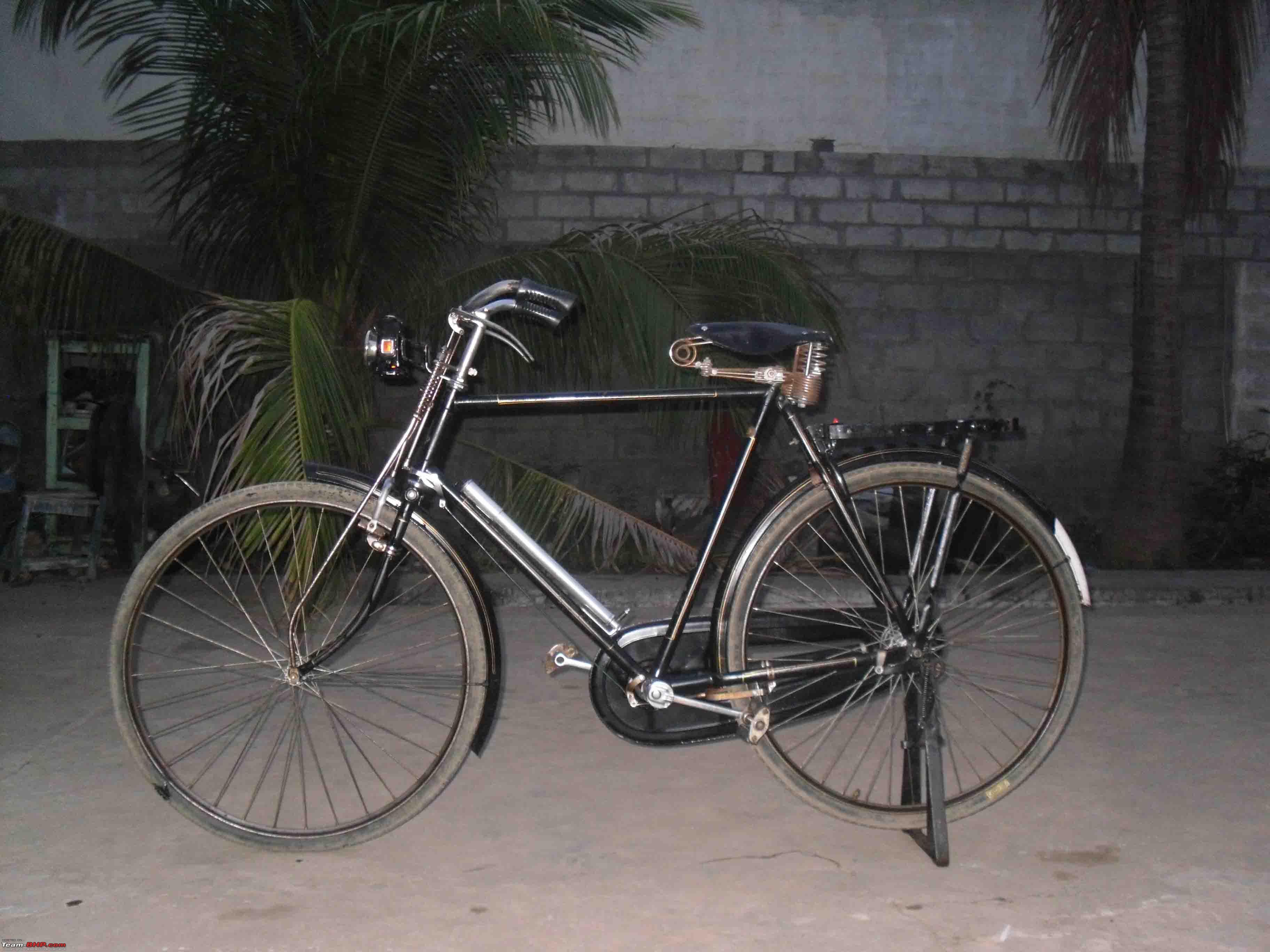
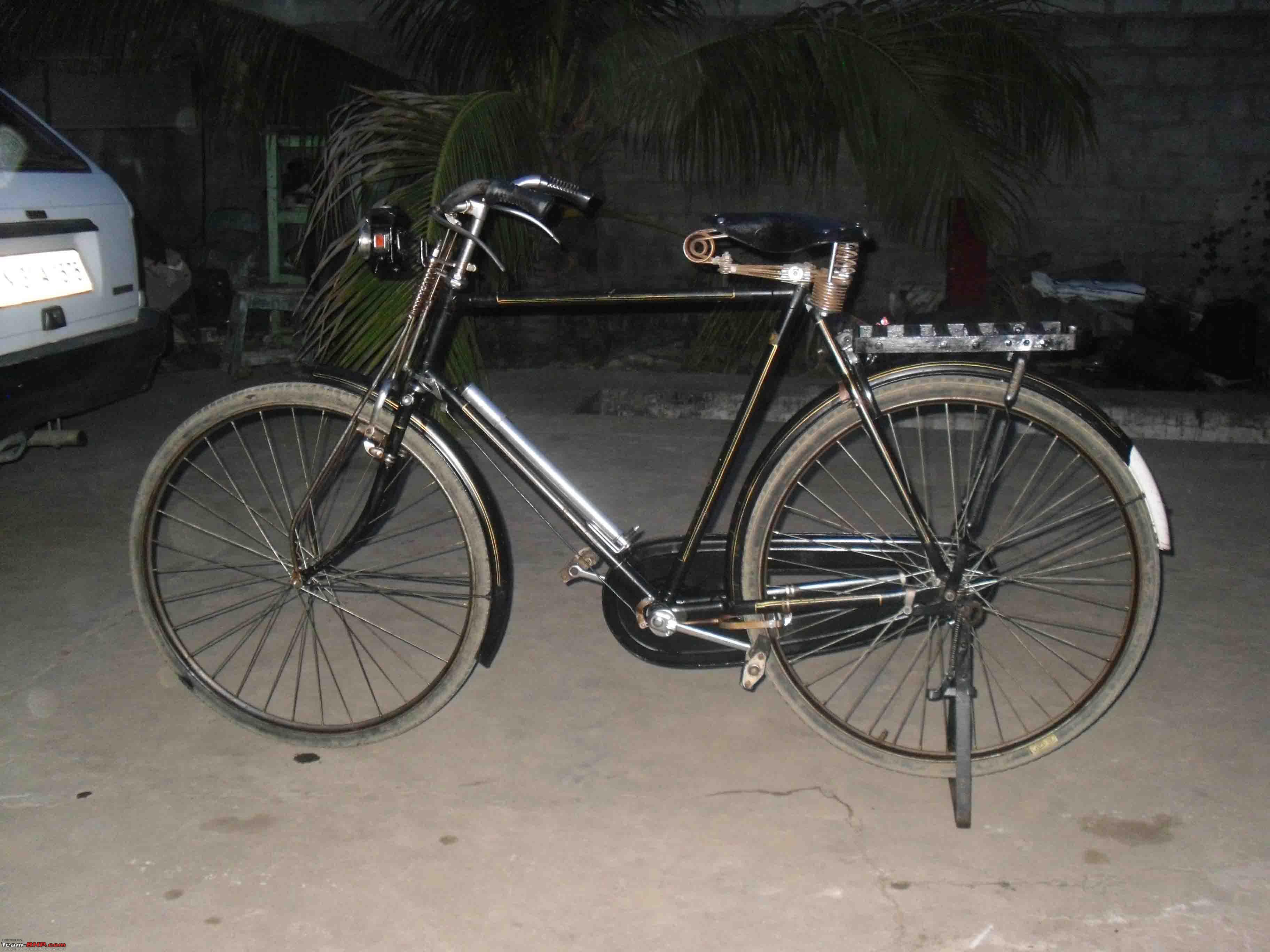
Dr.Rao’s compounder was a tall lean fellow, probably in his thirties when I was a little boy, and I never knew his name. We all called him the compounder. He used to arrive probably around 5.30 or 6.00 PM and left after the doctor leaves, around 9.00 or 9.30 PM. He drove a black classic old bicycle (see references for the bicycle and lanterns) and, as it grew dark on the way back, he had an oil lantern affixed on the handlebar. Those days, oil lanterns served as the headlamp for bicyclists in the night. We too had one such lantern and I always enjoyed filling up oil, twisting the knob to raise the wick, open the tiny door with a tiny red colored glass window, and light it using a matchstick. Though the doctor treated us, the compounder was more near and dear to all as he dispensed the medications in right quantities. He always powdered the tablets, measured into individual doses, and packaged in small paper packets. The most interesting dispensing method is for the liquid medicines. He had a variety of transparent glass bottles in different sizes (see references for sample medicinal bottles). Depending on the dosage, he would fill up the right bottle with the liquid medicine. Then he would take a long strip of paper, probably 1 cm in width and cut it to the length that matches the height of the liquid in the bottle. Then he would fold it into as many flips as the dosage, cut notches along the edge, that when straightened, looks like a series of octagons (see picture Bottle with Dosage). He would then fix this strip of paper using glue along the middle of the bottle and voila, we have our liquid medicine with correct dosage. When we are done with the dosage, we normally return the bottle back to the compounder so he can clean it and use it for another patient.

Almost everyone in the street and nearby streets consulted with Dr. Appa Rao for common illnesses. As time passed, several of my brother’s friends became doctors and started practicing in the same neighborhood. Dr. Appa Rao grew older as well, discontinued his practice, and moved out. We never knew what happened to him or his compounder after that.

References:
Lambretta scooter owned by Dr. Appa Rao. It looked like the one on the cover of this page: https://www.amazon.com/Lambretta-Bible-models-built-1947-1971/dp/1845850165
Sample medicinal bottles:

Antique bicycle with oil lamp headlight, used by the compounder:

Tuesday, November 5, 2019

Tech Around The Corner – Crime Prediction using AI / ML


Futuristic technology always fascinates me. As an avid Star Trek (Trekkie) fan, it is amazing to see several of the gadgets, in a limited form, comes to reality. The iPad, touch screens, handheld devices with massive bandwidth and compute power, flat screen TVs, automatic open/close sliding doors, sensor-based devices such as faucets, paper towel dispensers, and many more. Along these lines, I read an article in CIO Online, Can crime be predicted with AI/ML?, published through IDG Contributor Network. As AI/ML technology, algorithms and data collection avenues expand and mature, the author thinks that in a short span of time, we will have a pre-crime unit, as featured in the Tom Cruise cult classic, Minority Report. Instead of the three “precogs”, we will now have layers of Lifelong Learning Machines (L2M), continuously consuming petabytes of data by the hour, learn and adapt using biology based algorithms and project on the screens where and when the next crime would be.

Although scary, humanity has to adapt to the next technology revolution propelled by the advances in computing, AI, ML and robotics. In particular, such technology is bound to be used as a controlling factor in less democratic nations where a closed government and lack of journalistic liberties create a cauldron for secretive implementations aimed at its own citizens. America has to lead the way, formulate rules, and have the ability to counter balance a rogue nation using such technology to suppress freedoms. Aren’t we living in interesting times?

References:
CIO Article – Can Crime be Predicted with AI/ML? - https://www.cio.com/article/3401401/can-crime-be-predicted-with-ai-ml.html
DARPA – Lifelong Learning Machines (L2M) - https://www.darpa.mil/program/lifelong-learning-machines

Friday, November 1, 2019

Masana Kollai – Raid of the cremation grounds


Although many religious processions of various deities pass by our home in Mylapore, the one that creates most intrigue and kindles mortal fears in us children is Masana Kollai. Literally, it means a raid of the cremation grounds. It is a festival dedicated to goddess Amman, the South Indian Tamil name for goddess Parvathi or Kali. Later, I learned that this festival happens in the month of February/March and dedicated in particular to one goddess, Angalamman, which is another name for Lord Shiva’s consort, Parvathi. Deeply etched in my memory are the images, sounds, and the noisy spectacle of a procession of a huge, blood red faced idol of the goddess. It is probably 10 feet in diameter and carried by a coterie of strongmen on an open palanquin. The attending priest, bare-chested, wearing a red dhoti, hailing from the community that maintains the Amman temple, will stand in front of the goddess on the palanquin. This palanquin and the procession, will start from the temple premises and slowly make its way through the streets, making frequent stops. Families living in nearby homes will offer fruits, flowers, and coconuts to the goddess and the priest will give back the offerings along with sacred ash and the red sacred powder called kumkum. The ultimate destination is the Mylapore crematorium for the kollai or the raid.

The procession itself is an audiovisual spectacle. A cacophony of sounds, comprising of a duet or quartet of paramolams (a circular drum of about 3 feet in diameter, covered with taut cow or goat hide) , the haunting reverberations of the udukkai  (a handheld small drum, in the shape of an hourglass), thunderous blowing sounds from long and semicircular country trumpets, along with pleasing tunes from traditional nadaswaram and thavil, creates an atmosphere of a massive raid. Add to it, a multitude of country dancers painted like tigers in yellow and black stripes, country martial artists swinging sticks, and weapons made from deer horns, and a group of women, dressed in red or yellow saris, with flowing hair performs sami attam, a dance in a possessed state. You watch this once, and it will leave a lasting impression for life.


The epitome of all the mela is the gruesome, bloody entrails of a goat carried in a thatched bamboo tray called the muram. This will not be visible at street level as the vessel is on top of the palanquin. Hence, the only way to see it is from the top. As a kid, I am always intrigued and curious to see this macabre display. However, my mom will never let us children see this bloody display. I, along with a bunch of neighborhood kids, will pretend to be at the street level, and then rush upstairs to the open terrace, jump and hang from the parapet wall, pop our heads out, as we were shorter than the parapet wall, and excitedly glance at the entrails. It usually has liver, kidneys, and intestine. Not sure if I remember if it had stomach, but definitely liver, kidneys and intestine. Sometimes a few black colored, dead, headless chickens hang from the sides of the palanquin. Story goes that during rituals conducted at the temple, the priest, in a possessed state, bites off the chicken head and spits it out!
The entire procession goes to the Mylapore crematorium where the priest conducts a special ritual for the goddess that mimics the mythology behind this festival. I heard massive crowds throng to get Her blessings. I never ventured into the crematorium grounds until probably during college, when I went to say farewell to a very good fiend.

References:
Silambattam and Tiger dance example: https://www.youtube.com/watch?v=d29gLBFgy7E
Saami attam (see from 0.40 onwards) https://www.youtube.com/watch?v=xu3bFv4MJqA